Description
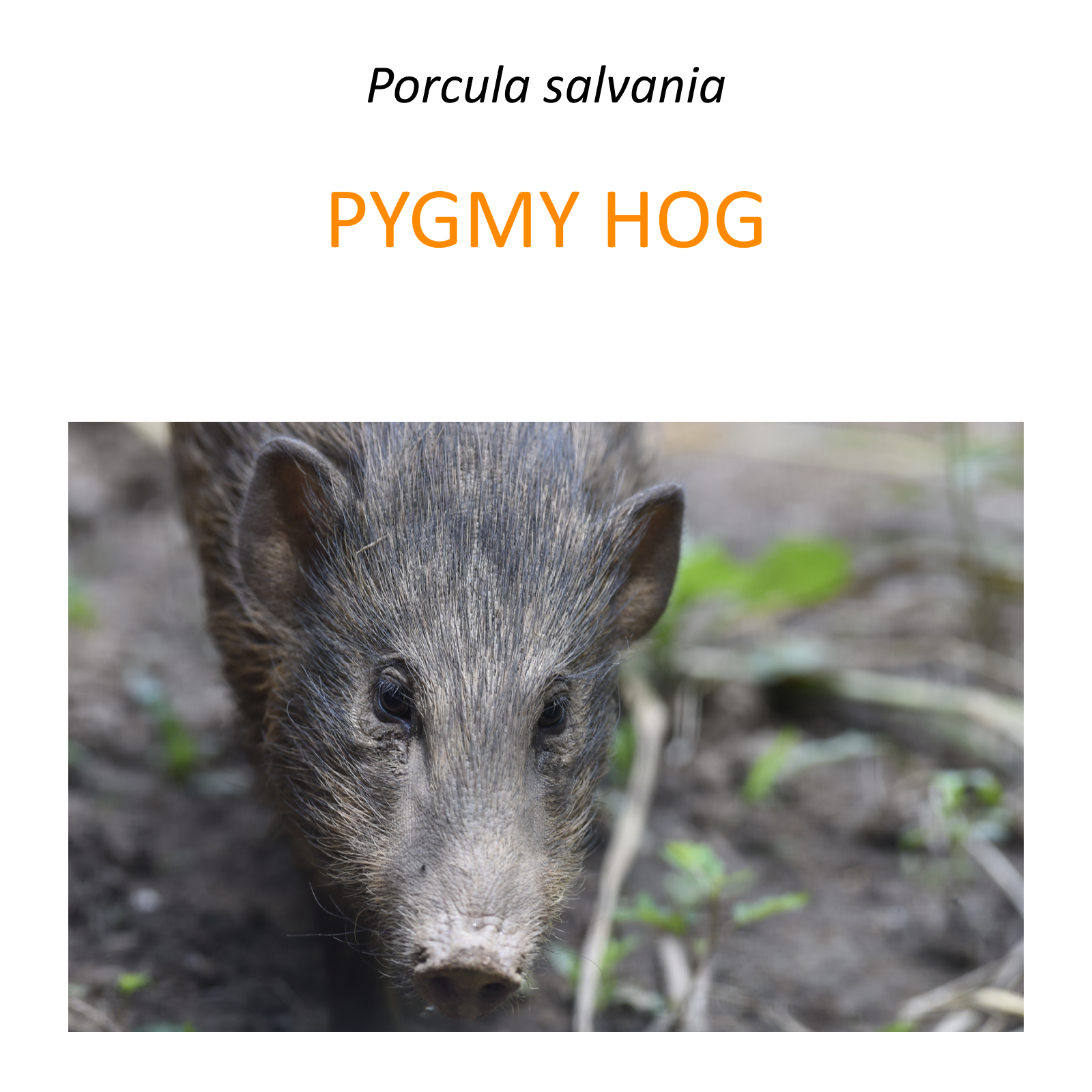
Pygmy hog is the smallest and rarest wild pig in the world. This species is now considered to be endangered. Fortunately, since 2020, the successful reintroduction of pygmy hogs to Manas National Park and Orang National Park in India has been underway, providing optimism for the future of this species.
Pygmy hogs are about 65 cm long and 25 cm high, weighing 8 to 9 kg. Females are a bit smaller and newborns weigh only 150-200 grams. They feed on roots, tubers, insects, rodents, and small reptiles. They inhabit dense, grassy undergrowth, where they build nests to raise their young.


Pygmy hogs experienced severe habitat loss and were thought to have become extinct in the 1960s. They have been driven out of most natural areas in India and Nepal. Subsequently, in recent decades, the breeding program and other conservation efforts have brought the species back. Today, nearly 300 animals live in the northeastern state of Assam (over 200 in Orang National Park and up to 100 in Manas National Park). These are not only the smallest wild pigs, but also some of the rarest animals in the world!
The pygmy hog conservation program is run jointly by the Indian government, the British Durrell Wildlife Conservation Trust and the local non-profit organization Aaranyak.


The long-term impact of pygmy hog conservation efforts is the increased scale of grassland restoration. The goal is to ensure that wild and reintroduced pygmy hog populations can thrive in the grasslands of Assam.
The activities, funded by the Foundation ZOO Wrocław – DODO, are based on monitoring reintroduced pygmy hogs, as well as expanded habitat restoration, including the removal of invasive plant species from grasslands, the control of native tree species, and fire management in the Panbari and Bhuyanpara ranges, where pygmy hogs occur.
A major milestone in the pygmy hag conservation project was the signing of a Memorandum of Understanding (MoU) on October 7, 2025, ensuring the full support of the Government of India for the program, which will facilitate the smooth implementation of conservation activities in the future.